







Daniel G. Very, DMD, MDS

Follow Us

Your New Smile

Scan the QR code above for a preview of your new smile

Our Blog

The Twin Block Appliance

June 25th, 2025

Orthodontic treatment involves a lot more than just straightening your teeth. For a healthy smile, your bite must be healthy as well! This means that the upper and lower jaws need to fit together properly and comfortably.

If your bite is out of alignment because of jaw misalignment, orthodontic treatment can help correct the shape and position of your jaws with devices called functional appliances. These appliances are most often used for young patients whose bones are still growing, and are designed to treat malocclusions, or bite problems.

Common malocclusions such as overbites and overjets can occur when the upper teeth protrude further than they should, or the lower jaw is positioned too far back, or both. The Twin Block appliance can be used in such cases to help move your lower jaw and teeth into alignment with your upper jaw.

Why “Twin”? Because the Twin Block appliance is two separate pieces, each made of wire and smooth acrylic. Both pieces are crafted to fit precisely over your upper and lower arches and can be adjusted as your treatment progresses. The top plate can also be adjusted, if necessary, to widen the upper palate.

Why “Block”? Acrylic blocks cover the biting surfaces of several of your upper and lower teeth. These blocks fit together like a 3D puzzle. When you bite down, the upper blocks interlock with the lower blocks, pushing the lower blocks forward just a bit before you can bite down completely. Over time, bit by bit (and bite by bite), the Twin Block appliance advances your lower jaw and teeth to create a balanced, comfortable bite.

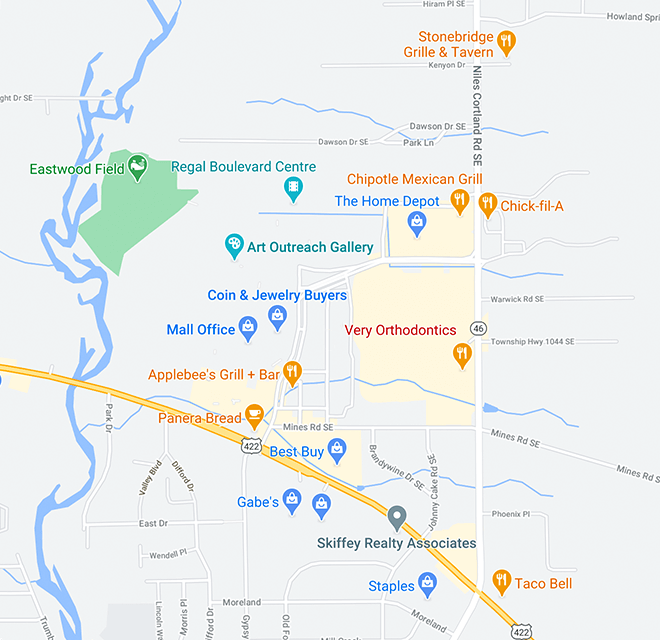
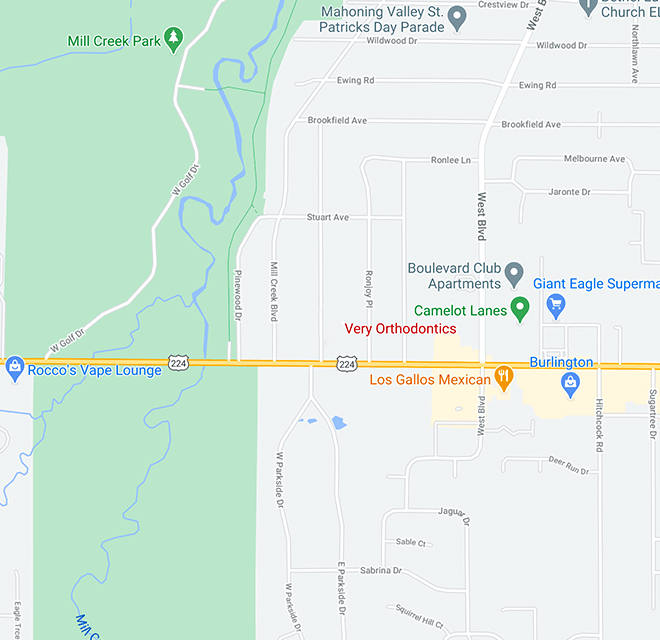
For the quickest and best results, you should wear your Twin Block appliance as directed. It’s made to be worn comfortably while you sleep, eat, and otherwise go about your day. (It’s a good idea to check with our Boardman or Niles orthodontic team to see about removing it when you’re active, especially for swimming and contact sports.) When it’s time to brush, the Twin Block appliance is removable. This means that you can clean your teeth and your appliance easily.

And, while it’s made to work hard for you, it’s not indestructible. Don’t expose your appliance to heat or hot water, as the plastic may warp. Use the cleaning methods we recommend. Finally, when your appliance is out of your mouth, keep it in its case! You don’t want your appliance to end up carefully wrapped in a napkin in the nearby recycling bin. Or, even worse, in your dog’s mouth instead of yours.

The Twin Block appliance might fit together like a puzzle, but there’s nothing puzzling about how to achieve your best and fastest results. Your success really depends on you. Follow Dr. Daniel Very and our team’s advice, wear your appliance as directed, and you’ll be on your way to a healthy, comfortable bite and an attractive, confident smile!

How much do braces cost?

June 18th, 2025

This is one of the most common questions that is asked at Very Orthodontics and, unfortunately, it does not have a simple answer. Just as every patient we see is unique, so is their treatment plan. Some patients have very simple problems which require less appliances and time, while other cases are much more complicated and may require multiple appliances and phases.

The treatment fee usually reflects the amount of orthodontic work required to complete the treatment plan. The only way to find out how much braces will cost is to schedule a consultation with Dr. Daniel Very. During your consultation, we will perform a complete oral examination, listen to your concerns, and explain how we will address your needs.

Our findings will include the cost of orthodontics and how long the treatment will take to complete. Give us a call today at our convenient location in Boardman or Niles for a consultation and discover how quickly we can make you smile!

What is a palatal expander?

June 11th, 2025

Orthodontists like Dr. Daniel Very recommend a first orthodontic visit and evaluation for your child around the age of seven. We will evaluate your child’s jaw and facial development and make sure that there is enough room in the mouth for the permanent teeth when they arrive. One of the recommendations we might make for early treatment is the use of a palatal expander. If you are unfamiliar with this device, let’s take a closer look at why it’s necessary and what exactly it does.

Why do we recommend the palatal expander?

There are two dental arches, composed of the upper and the lower teeth, in your child’s mouth. This arch-shaped design is meant to accommodate all the permanent teeth. Further, when the upper and lower teeth meet, they should result in a healthy occlusion, or bite.

Sometimes, the upper dental arch is simply too small to accommodate all of your child’s permanent teeth, leading to crowding, extractions, and impacted teeth. Also, a too-narrow arch can result in a crossbite, where some of the upper teeth bite inside the lower ones. An improper bite can lead to problems such as TMJ (temporomandibular joint) disorder, improper wear and stress on teeth, certain speech difficulties, and other potential complications. The palatal expander was designed to prevent these problems from occurring.

What is a palatal expander and how does it work?

The expander itself is a device that increases the size of the upper dental arch. Before your child’s bones are finished growing, the space between the two bones of the upper palate is filled with cartilage. This tissue is flexible when children are young, but gradually fuses solidly into place by the time they are finished growing (usually in the early to mid-teens). If the arch can be widened to accommodate the emerging permanent teeth, or to reduce malocclusions, this improvement can also affect the need for, and length of, future dental work.

There are several types of expanders available at our Boardman or Niles office. These are custom-made appliances, commonly attached between the upper teeth on each side of the jaw. The two halves of the device are connected with a screw-type mechanism that can be adjusted to widen the upper palate and dental arch with gentle pressure. This is a gradual process, with small adjustments usually made once or twice a day to slowly move the bones further apart. As weeks go by, you will notice a successful change in the spacing of the teeth. Your child might even develop a gap in the front teeth, which is normal and will generally close on its own.

If you would like more detailed information, talk to Dr. Daniel Very about the palate expander. We can tell you what to expect from this treatment if we think it is best for your child’s unique needs, and how to make it as easy as possible for your child. Our goal is to provide your child with the healthiest teeth and bite possible, always making use of treatments that are both gentle and effective.

Going on vacation? Remember these simple tips!

June 4th, 2025

If you are wearing braces and are planning a vacation, our team at Very Orthodontics would suggest that you be prepared. We put together a list of items that will be handy to have with you at all times while you are out of town. They include:

  • Toothpick, flosspick, or other interdental cleaners
  • Travel toothbrush
  • A water bottle or a mini bottle of mouth rinse
  • Orthodontic wax to help with discomfort from protruding wires
  • A small mirror for examining any possible issues in your mouth

Putting these items together in a “braces/oral hygiene kit” may be wise. You may even buy pre-made braces kits. Please ask us for more information.

If you happen to be on vacation and experience problems reaching our office, we suggest going online and searching for orthodontic practices in your area. Most orthodontists will lend a helping hand to another orthodontic patient and get him or her out of pain or discomfort.

We also suggest avoiding the following foods to prevent broken brackets and/or wire distortion while you are on vacation:

  • Chewy, sticky, or gummy food
  • Apples, pears, and other whole fruits (cut fruit into wedges before consuming)
  • Bagels and hard rolls
  • Corn on the cob
  • Hard candies
  • Hard cookies or pretzels
  • All varieties of nuts, including peanuts, almonds, and cashews

Finally, if you are wearing clear aligners and happen to lose your tray, don’t worry! Simply put in either the previous tray or the next tray and contact us as soon as you get home!

Follow these tips and you can have a worry-free vacation! Please give us a call if you have any questions!