







Daniel G. Very, DMD, MDS

Follow Us

Your New Smile

Scan the QR code above for a preview of your new smile

Our Blog

Spot Check

March 9th, 2022

After all your hard work, and months of orthodontic treatment, the big day is finally here—your braces are coming off! What you want to see: beautiful, straight teeth perfectly aligned to create a comfortable, healthy bite. What you don’t want to see: a collection of whitish spots dotting the enamel around your gum line or outlining the spot where your brackets used to be.

What are these spots? Can they be removed? And, most important, how do you avoid them?

Decalcification

Those white spots are caused by decalcification, or the removal of the minerals, especially calcium and phosphorus, that strengthen our enamel. How does this removal take place? When bacteria and plaque remain on the teeth, they produce acids that eat away at these minerals. The result is a weakened, discolored white spot in the enamel. Unfortunately, because many orthodontic patients don’t brush thoroughly around their braces, decalcification is an all-too-common problem.

Treating Decalcification

You might need cosmetic dentistry to eliminate or reduce white spots on the enamel. In some cases, they will fade over time, or teeth whitening can help. In more stubborn cases, tooth bonding or veneers can cover the affected enamel.

Preventing Decalcification

But, obviously, prevention is always better than treatment. Here are some of the ways to keep your enamel healthy and looking its best:

  • Brush thoroughly after every meal.

Getting rid of the bacteria and plaque on your enamel and around your gum line will greatly reduce your chances of decalcification—and cavities. Brush after every meal, and talk to us about the best products and techniques for cleaning your teeth and appliances. And be sure to spend the extra time you’ll need for brushing around your braces.

  • Floss

Even though it can be more difficult to floss with brackets and wires, it’s essential for removing plaque. We have suggestions for special flosses designed for braces wearers, and how best to use them. A water flosser can be helpful for reducing plaque if other flossing methods aren’t working.

  • Use fluoride toothpaste

Fluoride actually helps remineralize our teeth, replacing the important minerals that have been lost to acid attacks. We might also suggest remineralizing toothpastes or a fluoride rinse.

  • Watch your diet

Acidic foods increase the acidity levels in your mouth, sugars give bacteria the fuel they need to produce acids, and sticky foods allow bacteria to remain on teeth and braces longer. We’ll give you suggestions on the best foods to keep your teeth healthy (and your braces intact) while you’re undergoing treatment.

  • Have your teeth cleaned regularly

Your dental professional will be able to remove plaque and tartar that home brushing has missed.

  • Work with us!

If we let you know that you need to spend more time on your cleaning routine, or that you need to be more thorough when you brush and floss, take our suggestions to heart. We are happy to show you the most effective way to clean around your braces. Dr. Daniel Very can recommend the best dental products for your specific needs. We can suggest rinses and toothpastes that will help. We’ll let you know how much time you should spend brushing and how often.

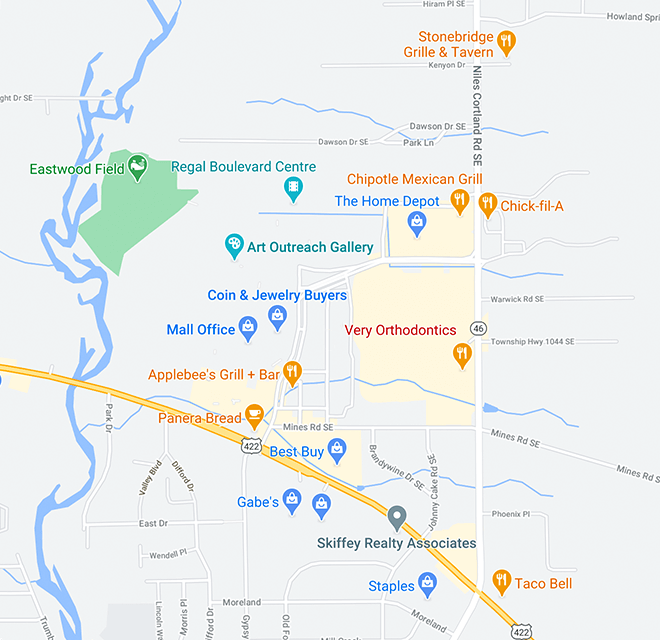
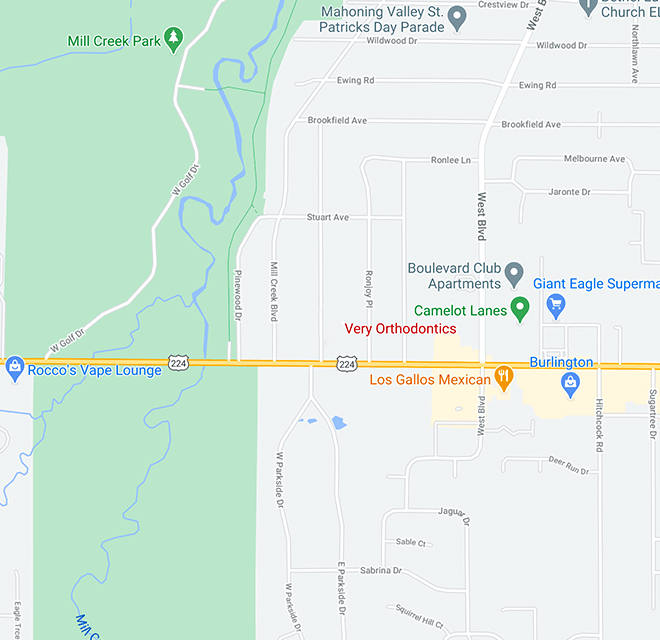
If you have any questions at all about keeping your teeth and braces their cleanest, we are here to help. Always feel free to talk to our Boardman or Niles team about concerns you might have about decalcification, discoloration, or any other potential problems. We are want to make sure that when your braces come off, you have every reason to smile!

Too old for braces? You Might be Surprised

March 2nd, 2022

Although adolescence is a common time to get braces, there’s no reason for adults of any age to have to deal with crooked teeth, overbite, underbite, or other dental issues. In fact, the American Association of Orthodontists notes that demand for orthodontic treatment in adults continues to grow, with adults representing 20% of new patients.

You’re never too old for braces or other orthodontic appliances, but it’s important to consider the following:

  1. Braces don’t have to be as noticeable as the metal brackets of the past. Many adults opt for ceramic or plastic braces, which are bone-colored or clear, respectively. Another option is a lingual appliance, which attaches to the back side of your teeth. These so-called “invisible” braces are much less noticeable than traditional options.
  2. By adulthood, bone growth has stopped. This means that certain structural changes can only be achieved by surgery. Although this typically affects people with significant crowding, bite, or jaw problems, Dr. Daniel Very can provide an individualized treatment plan that addresses your unique issues.
  3. Treatment may take a bit longer. The length of orthodontic treatment tends to be slightly longer for adults than adolescents. Exact estimates vary by individual, but the average length of time for adult braces wearers is two years, according to the Harvard Medical School.
  4. Outcomes are just as good for adults! Many adults worry that it’s too late to treat their orthodontic problems. However, treatment satisfaction tends to be very high, which is a testament to how effective braces can be in middle-aged and older adults.

Looking Back at the Old Days of Braces

February 23rd, 2022

Braces can be painful, but if you are a teen who loves being social, the worst part about them can be their look. They show up in your photos, and you will not be able to take braces-free photos for several months, or even years. The time will pass, though, and your teeth will be the better for it. In the meantime, consider the other people who have survived braces.

Plenty of People Get Braces

There are many reasons for getting braces:

  • Correct an overbite or underbite
  • Straighten teeth
  • Fix poorly-spaced teeth

With so many possible ways to get braces, it’s no surprise that they are so common.

Find Out Who Had Braces

The long lists of celebrities who had braces as teenagers or even adults can give you the comfort of knowing you are in good company. Even better, these lists provide visible proof that there is life on the other side of braces. Actors and actresses on the Cosby Show, Scrubs, and Ugly Betty, as well as tennis star Martina Hingis and Miss America 1975, Shirley Cothran, had braces. Ask your parents. If they didn’t have braces, there is a good chance that some of their siblings did.

Benefits of Braces

Wearing braces can make your life a lot better in the future. Your teeth will be more attractive, and your smile will shine through in photos of you. Straight teeth are not just about looks, though. They can prevent a variety of health problems, such as caries, gum disease, speech impairments, and trouble chewing. Be patient, and the benefits of braces will come.

I Only Have One Crooked Tooth. Should I See an Orthodontist?

February 16th, 2022

Your smile is just about perfect. There’s just that one tooth that’s out of place. So, do you really need to see an orthodontist?

Absolutely! Why? There are several good reasons.

First, let’s check to make sure there is no physical problem causing that turned tooth. A crooked tooth might result from an early oral trauma while the tooth is developing, or a baby tooth lost too early, or the loss of a nearby adult tooth. But a sudden change in a tooth’s orientation might also be caused by a cyst or a tumor. If you notice any changes in your tooth’s position, it’s a good idea to talk to Dr. Daniel Very.

Second, we want to make sure your bite is aligned properly. If your tooth is crooked due to crowding by your other teeth, or if it has rotated a bit because there is too much space between your teeth, your bite might be affected as well. Malocclusions, or bad bites, can lead to a number of unpleasant consequences, including headaches, jaw pain, and increased pressure and stress on the teeth.

Third, a crooked tooth can lead to more difficulty brushing and flossing between and around the teeth, which increases the chance of tooth decay.

Fourth, we provide the professional medical care you need. Some people with a turned tooth attempt self-help with rubber bands, dental floss, or other home remedies. Not only is this unlikely to work, it can actually lead to infection, root problems, and even tooth loss.

Maybe there are no health concerns causing, or caused by, your crooked tooth. Your bite is strong, and you like your unique smile just the way it is. In that case, smile on!

But if you are interested in aligning that one crooked tooth with the rest, give our Boardman or Niles office a call, and we’ll get to the root (literally!) of the problem. Depending on the reason your tooth is twisted, we’ll suggest the braces or clear aligners that will provide your most effective orthodontic treatment, and give you safe and lasting options for achieving the smile you’ve always wanted. Perfect!